
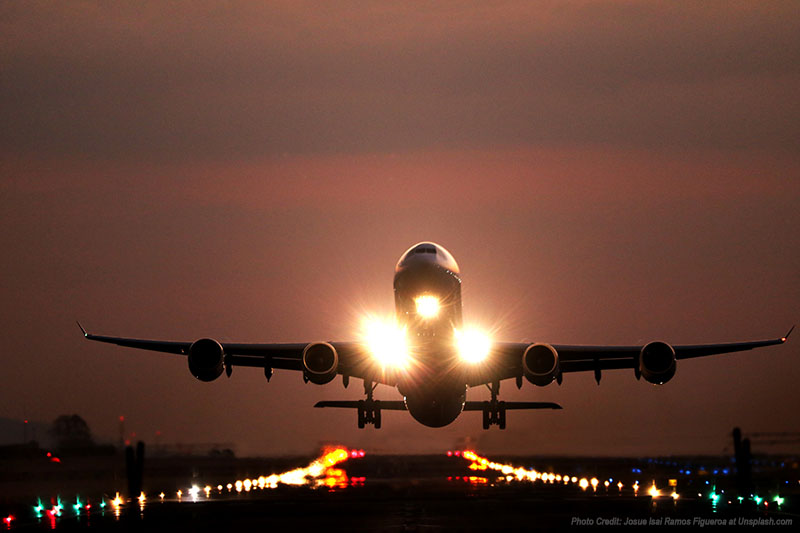
Staines Town Society objects strongly to the proposed Heathrow expansion because of its extreme adverse impact, locally, regionally, nationally and globally. We also object to the plan to impose an extra 25K flights per year before the runway is even built.
- Locally
It is hard to comprehend the scale of the devastation to be wrought on the area round the airport. It is worst to the North West, with the obliteration of Longford, most of Harmondsworth, parts of Sipson, West Drayton, and other communities, leaving their remaining inhabitants faced with overwhelming noise and air pollution. At least 750 houses and 300 local businesses will be destroyed and nearly 6,000 homes will be in conditions dangerous to health.
The size of the Compulsory Purchase Zone on p 97 of the consultation document shows the massive disruption of the area. The even larger DCO limits show other areas that may be taken over. The lack of detail about proposals to build terminals, hotels, warehouses, workers’ accommodation etc is extraordinary. It suggests inadequate preparation and an attitude of casual contempt for the communities to be destroyed or blighted. The changes to the towns and villages, road system, water system, parking, and loss of habitats and landscape will be alienating and disorienting even to those not actually dispossessed of their homes. Vague promises of landscape improvement, and ‘working with partners’ on e.g. bus services, offer no reassurance.
The small Surrey towns of Stanwell and Stanwell Moor will be significantly adversely affected. The 22,000 space 9 storey car park proposed on Green Belt in Stanwell is a shocking breach of Green Belt policy, and another blow to this town which has suffered the adverse effects of the airport for far too long already. Part of the site is public open space set aside as a buffer between Stanwell and the airport as part of T5 mitigation, and part has been worked for gravel, with the promise that after the gravel was extracted the land would be restored and the people of Stanwell would get their Green Belt back. That promise should be kept. Residents living in the houses north of Park Road should not be faced with an enormous ugly building across a narrow strip of grass. Residential streets in Stanwell and Stanwell Moor will be choked with parked cars as passengers and airport staff make use of the free shuttle without paying to use the car park.
Close to the car park will be another large parking area for HGVs. P 69 says that cargo capacity is to be doubled but the number of HGVs will not double. It does not deny that there will be a large increase.
Farther east a large complex of industrial buildings including a 7 storey cargo warehouse will be squeezed in on other Green Belt sites in Stanwell, and HGVs must reach them. The Southern Perimeter Road is to be increased almost to motorway size, causing yet more noise and pollution, but there will still be lorries coming & going in other directions through the streets of Stanwell.
P 63 refers to a pledge ‘to deliver expansion with no more airport-related traffic on the roads than there is today’ – unhelpfully excluding all the construction traffic. How will compliance be monitored, and how will Heathrow be held to account when the ‘pledge’ is broken? It is an enticing thought, but an unlikely one, that the runway will shut down if surface traffic exceeds the limit. It is easy to make pledges, such as the one made by HAL (then BAA) after the T5 inquiry that they would never, never seek a third runway.
These cars and lorries will use the normal road system as there are no dedicated routes. Most will be on Airport Way to J14 of the M25 – but the M25 is already overcrowded and has no room for a big increase. Others will congest the roads of Stanwell.
Another obvious route from the car and lorry parks is south via Stanwell Moor Road (over 1000 extra vehicles per day predicted) to the Crooked Billet Junction. This will funnel unwanted traffic through Staines and Ashford. As the total numbers of cars and lorries are extremely large, there will be significant adverse effects on all these routes, and knock-on effects across the whole of Spelthorne.
A new railhead is proposed near Colnbrook to transport fuel and construction materials, so there will be many lorries going to & from Colnbrook, putting yet more pressure on crowded roads. A great deal of fuel and construction waste will have to be moved by road before the railhead is built.
Stanwell Moor and Stanwell will also lose the open ground east of the M25, including the Vineries allotments, and the land south of the planned cargo warehouse. These land areas will become ‘attenuation ponds’ or ‘balancing ponds’ or ‘reedbeds’ or ‘dirty water treatment areas’ depending on which document you read. The terms are not explained, and in any case these areas will be surrounded by 2m earth bunds and security fencing, so will contribute nothing visually.
On p14 of the Stanwell & Stanwell Moor booklet is a map headed ‘Airport boundary’. This shows the whole of Stanwell Moor moved inside the airport boundary. We hope this is merely incompetence rather than a sinister attempt to take over the village.
The building of 5 new terminals, net gain 3, and several hotels will lead to a massive expansion of shopping, resulting in further loss to the Treasury and another blow to struggling High Streets around the airport, particularly if much retail is landside.
There will be very significant changes to the local water system. Five rivers, the Colne, Wraysbury, Longford, Duke of Northumberland’s and Colne Brook, plus some smaller watercourses, will be diverted, combined, culverted and finally released. A number of lakes will be removed, and new water storage areas created. There will be changes to groundwater flow pathways. All this creates new flooding uncertainty in a very fragile area – large areas of Spelthorne and Runnymede were flooded in 2014 and hundreds of households had to be evacuated.
Staines Moor, our very precious open space, is a Site of Special Scientific Interest for two reasons. One is that the Colne flows into it from chalk areas further north and the interaction with our gravel & clay has produced an unusual ecology in which various rare plants flourish. [The other is that it has never been under the plough – unimproved common grazing land since before Domesday Book.] Changes to the Colne upstream may adversely affect the Moor. Worsening of air pollution may be toxic to the plants and hence to animals.
Construction will last 25 years and bring further land loss, noise, pollution and disruption. The scale is massive, with over 25 million m³ of earth being moved. Work will be 24/7 at times. About 14,000 workers will have to be accommodated on site, or drive in every day. Stanwell Moor will lose yet another piece of Green Belt land for a Construction Support Site to house workers, parking, offices and working areas. This is one of about a dozen Construction Support Sites around the airport. Noise barriers, buffer zones and restrictions on working hours are needed to protect residents living near Construction Support Sites, but none are planned.
The extra jobs promised in the document will also increase housing pressure and the number of workers coming in from outside every day.
- Regionally
Only the Heathrow PR team could believe that an increase from 480,000 flights per year to 756,000 flights per year will not increase the noise burden across the Thames Valley, London and other parts of the SE. Individual planes may become quieter, or they may not – many promises of quieter planes have been made and broken over the years, as the technical problems prove intractable. But the fact that more and more planes are droning overhead, hour after hour, causes increased distress.
Evidence from people affected by excessive noise shows that the map on p 75 is seriously misleading. The area affected is far more extensive than shown. If Heathrow cannot admit to the current noise burden, its future predictions are not likely to be trusted.
Similarly the ‘legally binding noise envelope’ on p 79 must be taken with a pinch of salt. Will the permitted noise levels be set so high that people will still suffer unacceptable noise? Will Heathrow be held accountable if the agreement is breached, and what action will be taken?
The WHO threshholds of noise disturbance have been ignored. The noise levels qualifying for compensation and mitigation are too high. The proposal for an extra 25K flights per year before any mitigation measures are in place is particularly iniquitous.
The consultation document admits on p 77 that a large number of people will experience an increase in aircraft noise, and some communities will be overflown for the first time. The ‘design envelopes’ of possible flight paths shown in the airspace consultation earlier in 2019 show that there may be major changes in places overflown, including flights directly over Spelthorne.. No community for miles round the airport is safe. The actual flight paths will not be revealed until 2022, after planning consent is given. It is admitted on p 83 that Kew Gardens, Chiswick House, Syon Park, Osterley Park, Richmond Park, Windsor Park & gardens, Eton and Ditton Park will experience significant increases in noise levels. Most of them are seriously spoiled by plane noise already.
The proposals for respite are welcome but do not go far enough. There should be a commitment that every community overflown gets some respite. Similarly the night flights regime has some good ideas, e.g. that people woken at 5.30 am should have had peace the previous evening – but in a civilised society they would not have planes roaring over their houses at 5.30 am at all. Even the Airport Commission recommended a ban from 11.30 pm till 6 am.
No evidence is given for the claim on p 72 that air pollution from Heathrow ‘falls sharply with distance from the airport’. We wonder where all the nitrogen dioxide, sulphur dioxide and particulate matter go when they fall from planes or are emitted by ground sources, particularly during construction. The main source of air pollution is also claimed to be surface transport, and all those cars are driving through the wider area to get to the airport.
The combined effects of noise and poor air quality are detrimental to health across the region. Recent and continuing research is revealing ill-effects including asthma and other respiratory diseases, various cancers, sleep disturbance, stroke and heart disease, delayed development and loss of learning capacity in children, dementia, depression, bipolar disease and other mental illnesses. It is the height of irresponsibility to go on increasing the danger before it is properly understood.
- Nationally
(a) The economic arguments for and against airport expansion are regularly distorted by the aviation industry. In particular the tourism deficit is ignored. Britons spent £22.5bn more abroad than foreign visitors spent in the UK in 2018. This is not only a loss of £22.5bn to the national economy, but a loss of about 1.1 million jobs in the UK tourist industry, all over the country.
The enormous cost of the subsidy on aviation fuel, and other tax concessions to the industry, are also ignored.
(b) The consultation document fails to explain who will pay for the immense infrastructure changes proposed: moving the M25, the A4, and the A3044, expanding the Southern Perimeter Road, diverting rivers and lakes, erasing whole communities and compensating the displaced inhabitants, moving the Colnbrook incinerator, the Longford substation, the Bath Road sewer, the asphalt plant, the immigration centre, a school, the Special Needs centre, 3 allotment sites and BA’s headquarters, building warehouses, hotels and carparks as well as runway, taxiways, four fuel tanks and five new terminals. The cost is currently estimated as £32.5 bn and is escalating rapidly in true Concorde fashion.
If this cost is borne by the taxpayer it is a major blow to the UK economy. Paradoxically, if it were paid by Heathrow, then passed on to the airlines, resulting in substantially higher fares, this would reduce demand and remove the claimed need for expansion.
There are also substantial revenue costs, for neighbouring authorities in dealing with adverse impacts, emergencies and enforcement, and for the whole country in consequential health costs. Increasing greenhouse gas emissions increases the probability of extreme weather and rising sea levels. It is quite hard to make an economic case for inundating London.
The increased profit from retail and car parking will go to HAL, which is 90% foreign owned, so more loss to the UK economy.
- Globally
We are living in a climate emergency. All possible steps must be taken to reduce emissions of carbon and other greenhouse gases. Planning to increase emissions shows a reckless disregard for future generations and the planet. Demand from airlines for new routes (consultation document p 60) should be resisted, not catered for.
Unbelievably, the section on p 89 headed ‘Climate change’ is not about the proposed expansion’s contribution to climate change, but only about the effects of adverse weather on the operation of the airport. The previous section ‘Carbon’ claims that carbon emissions from additional flights will be offset under CORSIA, without mentioning that CORSIA may not be implemented. But offsetting does not excuse the emissions from flights: it would always be better to plant the trees etc but not emit the carbon. It is necessary to reduce emissions, not merely keep them at the same level. The good action does not erase the bad one: that would be like committing a murder and then having a baby and saying ‘that’s population-neutral’.
The Airports NPS only requires that Heathrow expansion does not materially affect the ability of the UK to meet its carbon reduction targets. As these targets exclude emissions from international aviation, and flight emissions make up 96% of the Heathrow total, it is clear that the NPS requirement is trivial compared with the totality of emissions. The PEIR admits that expansion will have a ‘significant negative effect’ on global climate change. Heathrow is already the largest source of carbon dioxide in the UK (ref: Aviation Environment Federation, Aug 18).
Greenhouse gases other than carbon dioxide are barely mentioned. The whole project ignores the conclusions of the UK Committee on Climate Change, that emissions of greenhouse gases must be capped at 31Mt across all UK aviation. Heathrow expansion will produce an extra 183 Mt.
Heathrow expansion would be a disaster for the local area, for the UK and for the world. It must be refused.
Recent Comments